For Arizona, prohibition came early in 1915. Although stills were probably put to work almost immediately, law enforcement did not seize many for the first 4 years of enforcement. Then, starting in 1919, a crackdown on the illegal practice revealed just how wily and creative many of the bootleggers had become.
February 16, 2020
January 26, 2020
Archeological Survey at 140 N. Granite St.
In 1994, 16 people from the Yavapai Chapter of the Arizona Archeological Society spent over 400 hours investigating the lot at 140 North Granite St.
“The team of dust-caked investigators found building foundations and artifacts seven feet below street level,” the Courier reported. Although nothing particularly mysterious or unexpected was located, the excavation did offer insights into everyday life and what happened with some of the tons of waste material from the Great Fire of 1900.
January 19, 2020
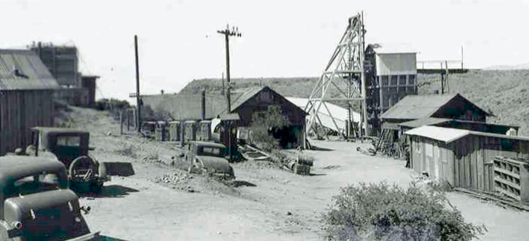
The Forgotten Mother-Load at Richenbar, AZ
Many are familiar with the mining riches that came out of Tip Top and Crown King, but there was another mother-load of gold in that area known as Richenbar.
It was 1867 when three miners decided to explore what appeared to be an ancient, worked-out mine. They descended a 45-degree angled shaft into what appeared to be a cave. There were no timber reinforcements to be seen, and the only thing connecting the ceiling to the floor was a single 4-foot pillar in the middle of the expanse. Upon closer inspection, they noticed a pure vein of gold within the pillar measuring 2 inches thick. Two of the miners wanted to extract it, while the third thought it was too dangerous. The two carefully worked the pillar and were successful in extracting a “coffee sack” full of ore, which eventually was found to contain a whopping 937 ounces of gold.
This mine would come to be known as the Aztec Mine when ancient Native American tools were discovered inside. Eventually, the entire surrounding area would have claims, and the town of Richenbar was born. Soon, the gold deposit there became famous, and the famous would invest in an area so rich that one miner thought it would bring "death to gold."
Labels:
Arizona,
Bumble Bee,
celebrities,
Crown King,
fires,
freighting,
ghost towns,
Gillette,
guns,
History,
Mayer,
mines,
mining,
saloons,
stage stop,
town names
Location:
Richinbar Mine, Arizona 85324, USA
December 22, 2019
Christmas 1950: The Children’s Voices Rise
As winter approached in 1950, anxiety about the Korean conflict and the effect it might have on America’s booming economy was palpable. However, in the midst of this, it would be the children of Prescott who would bring the cheer of Christmas.
Labels:
Christmas,
Ft. Whipple,
Granite Dells,
Hassayampa Inn,
History,
Kiwanis,
Miller Valley,
Monday Club,
Prescott,
Smoki,
St. Joseph's Academy,
stores,
war
Location:
Prescott, AZ, USA
December 8, 2019
December 1, 2019
1890s Thanksgivings Sported Turkey Shoots and Football
When Thanksgiving first became a holiday, Prescott was newly born. The first celebrations were muted in both Prescott and the Southwest, however, due to the ongoing Indian Conflicts. Stories of the Pilgrims and the friendly Indians who helped them survive seemed farther away than Plymouth Rock itself. In the 1890s, however, most of the local conflict had been put to rest. Prescott started to celebrate Thanksgiving “quietly,” the paper observed, but by the middle of the decade, the town began to create some of its own Thanksgiving traditions.
Before the 1890s, several churches in Prescott would hold morning services. Starting in 1868, the evenings would feature gala balls. These annual traditions continued through the 1890s, and by the middle of the decade, two sporting events were added to the list: turkey shoots and football games.
Labels:
Arizona,
Entertainment,
football,
Ft. Whipple,
guns,
History,
hunting,
Jerome,
Prescott,
Prescott Gun Club,
Thanksgiving
Location:
Prescott, AZ, USA
Subscribe to:
Posts (Atom)