Showing posts with label mines. Show all posts

June 28, 2026

Wickenburg in 1870

Henry Wickenburg

In 1870, Wickenburg was a young, booming town. Founded in 1863, it wasn’t officially incorporated until 1909. The boom was largely due to Henry Wickenburg's discovery of the Vulture Mine—“The biggest and richest gold mine yet discovered on this continent [the Vulture] is yielding plenty of ore,” the Weekly Arizona Miner stated. Two mills were running at this time, one of which had a whopping 40 stamps to crush the ore.

June 14, 2026

The Forgotten Pioneer & His Lost Gold

Nathaniel S “Boston” Graves died January 12, 1911, at the age of 88. He was “one of the earliest arrivals in this section of the Territory and also one of the most popularly known miners,” the Weekly Journal Miner explained. “He was more familiarly known as Boston.” He took ill with the flu (or grippe as it was called back then) late in 1910, having spent that year searching for “a ‘pothole’ that contained a vast amount of free gold.”

March 29, 2026

The First President to Visit Yavapai County

The Weekly Journal-Miner and the residents of Yavapai County were absolutely enchanted. The President of the United States, William McKinley, would be visiting the Arizona Territory, and his first step upon the young territory’s soil would be in Yavapai County!

January 11, 2026

December 7, 2025

Christmas Celebrations in Isolated Mining Camps, 1903

Iron King Mine

Despite being isolated in the wilderness of Arizona, mining camps still enjoyed wondrous and touching Christmas celebrations in 1903.

November 23, 2025

8 lb. Gold Bar Awaits to be Found

Many lost treasure stories are based on lore and campfire stories. This one is based on newspaper accounts of a tragedy.

February 16, 2025

The Forgotten Mining Town of White Horse City

The genesis of White Horse City was the locating of three mines in the Walker district in the Spring of 1899. The original owners, GM Wright, CW VonWolfe, and R Horsecroft, founded the Lone Pine, Hammer, and White Horse mines. “The property is located only seven miles from [Prescott] in the mountains just east of Lynx creek and to the right of the McCabe road,” the Weekly Journal Miner described. These mines were located between the highly successful McCabe and Mudhole mines in the Walker district. 

December 15, 2024

Was Coronado’s Gun Found in the United Verde Mine?


It was late autumn 1900 when a minor cave-in occurred in the giant United Verde mine in Jerome. On December 3, as workers cleared the mess, they were astonished to find a newly exposed cave that contained a mysterious gravesite falloff artifacts. “It was with wonder and awe that the workmen first entered the cave and handled the relics that must have been laid away centuries [ago],” the Jerome News described, adding that it created quite an excitement in the copper town.

September 29, 2024

The Mystery of Prescott’s Mineral Fountain

Before the Plaza fountain we know today was constructed in 1910, the Plaza had a “Mineral Fountain” (pictured above).  Along its outside boundary were a number of what the Weekly Arizona Journal-Miner described as “peculiar red rock[s]…about which there has been much speculation as to what [they are].”


“The rock is peculiar in that it is susceptible of a good polish and it contains practically no grit," the paper continued, and is very soft, as it can be whittled with a knife like a piece of chalk. When the fountain was being built, this rock attracted general attention from all who saw it, but no one seemed able to classify it.”


Then, in April 1903, two investigators identified the source of these peculiar rocks, not too far from Prescott. They gathered samples to take to several different assayers, and what they found was a great surprise to everyone.

August 25, 2024

The Birth of Clarkdale, Arizona

The town of Clarkdale was a pet project for Senator William A Clark, owner of the United Verde mine in Jerome. It was the first planned community in Arizona and included all the makings of a modern town. It provided telephone, telegraph, electrical, sewer, and spring water services for its residents. Situated at the bottom of Cleopatra Mountain, it would be the smelter town for the mines of Jerome and the surrounding area. “To build a perfect town [was] to be the aim and ambition of former Sen. Clark,” the Mohave County Miner wrote, “and money will be lavishly spent to make it as near [perfect] as possible.”

February 5, 2023

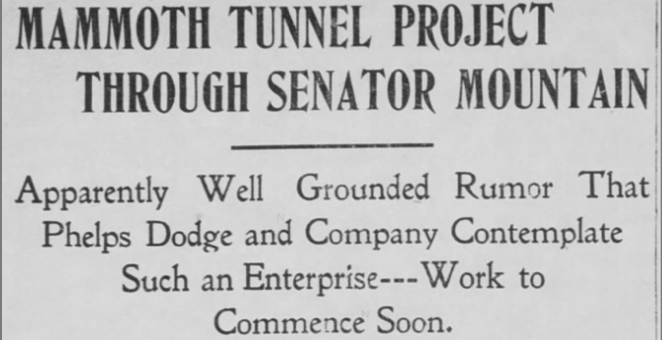
The Mammoth Senator Tunnel

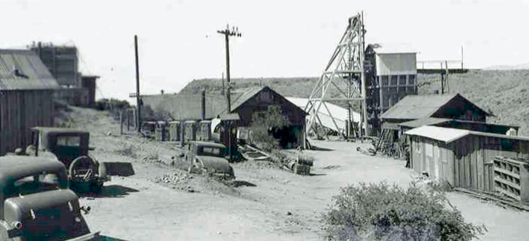
In the early prospecting days of the 19th century, the Senator and other adjacent mines were thought to be a bonanza of gold ore. They worked down until they reached water, and work was given up. However, in early 1905, a plan was announced that would completely revive the Mt. Union section of the Hassayampa mining district.

April 24, 2022

Gun Fight at the Independence Mine

James S McClure, age 36, arrived home unexpectedly from a month-long business trip to Colorado. When he came upon his surprised wife, who was on her way to the post office, he was “out of sorts,” the Prescott Evening Courier reported. When she returned to their ranch that surrounded Tussock Springs, her husband was still in a sour mood. She was on her way to take the mule out to pasture when “he asked her to wait a minute,” which she did.


What would transpire in the next few minutes would decide whether Mrs. McClure would live or die.

January 1, 2022

Robert Todd Lincoln Visited Prescott Thrice

It was early February 1894 when the announcement was made in the Journal-Miner that Robert Todd Lincoln, son of President Abraham Lincoln, would be visiting Prescott the following month. Accompanying Lincoln were three millionaires from Chicago: Marshall Field, “the many times millionaire” department store mogul; NK Fairbanks, the millionaire meat-packer; and Norman Ream, a manufacturer of agricultural implements.


The trip was extremely important to Yavapai County at a time when capital was needed to develop both mines and railroads, and it would ultimately be the first of three visits by Lincoln.

December 13, 2020

The Senator Highway

There was a time when Senator Highway was being considered as a part of the north-south territorial highway, connecting Prescott to Phoenix, but it would never make it.

October 18, 2020

1920: Million-Heir Boy Kidnapped Near Drake

A group of three detectives parked their automobile about a mile and a half away from the Puntenney lime mine near Cedar Glade (present day Drake) and began to walk toward the office. It seemed a long way to trudge, but they wanted their story to be believable.


“Our car broke down,” one of them told the office manager. “What kind of mine do you have here? May we look around while we wait for help?” The three began to feign interest in the operations as they set about to look for their real objective—an 11-year-old boy named Willie. 


One of the detectives peered into a building and spied the youngster. The three men left, but that would hardly be the end of it. They were plotting to steal William Hurd Barrett for the third time in less than a year.

October 11, 2020

1910: A Killing Near Thumb Butte

Miss Virginia Hite, a popular school teacher, arrived at the Plaza with her horse in a lather. She had come from the Sweeney and Anderson mining camp near Thumb Butte. The ride “of over seven long miles, on dangerous ground,” was made in a “record-breaking 30 minutes,” the newspaper reported. She had ridden her horse “at almost full speed the entire distance, never drawing rein until she reached the Courthouse Plaza.” 


There had been a shooting at the camp, and the sheriff and a doctor were needed immediately.

August 23, 2020

Harrison Yarnell and the Mystery of Rich Hill

“It was a piteous scene and remarkable in the extreme,” the Journal-Miner observed. Harrison Yarnell (for whom Yarnell, Arizona, is named) stood before Judge Frank O Smith, a broken man. He was applying for admission to the Pioneers’ Home in Prescott—something reserved only for the destitute. “I’ve tried hard to keep from this,” he told the judge, “but I’ve fought my battle, and I’m through.”


At the very least, it was bitterly ironic. His namesake mine, which he founded, had yielded $12,000,000 worth of gold at that point. "All the money, however, went back into the ground in an attempt to find the big deposit of gold which he believed was to be found within a space of five miles square around the Yarnell mine,” the Hassayampa Miner described, but it was his attempt to solve one burning mystery that took his last dollars.

June 7, 2020

Story Behind the Place Name: The Bradshaws

Oro Belle Mine & Mill in the Bradshaw Mountains

It was Autumn, 1863. Prescott had not yet been founded. William Bradshaw and a group of men were standing atop a mountain in the “Silver Range” with nothing to see but wilderness from horizon to horizon. Seeking gold and silver, they happened to be walking upon the largest deposit Arizona would ever know.

Not only would the mountains he was standing in be named for him, but there are no less than 9 other locales that bear his name: Bradshaw City, Bradshaw’s Ferry, the Bradshaw mining district, Bradshaw Mountain High School, Bradshaw Mountain Middle School, the Bradshaw Mountain Railroad, the Bradshaw Ranger District, the Bradshaw Trail, and the Bradshaw Springs and Stream.

March 29, 2020

Story Behind the Place Name: Poland Mine, Creek & Junction

His name was Davis Robert Poland, and he was a true frontier placer miner. He came to Yavapai County early, when one could walk down a creek bed trail and find large gold veins, embedded in quartz ledges, glittering in the sun. Indeed, this happened to Poland several times.

January 19, 2020

The Forgotten Mother-Load at Richenbar, AZ

Many are familiar with the mining riches that came out of Tip Top and Crown King, but there was another mother-load of gold in that area known as Richenbar.

It was 1867 when three miners decided to explore what appeared to be an ancient, worked-out mine. They descended a 45-degree angled shaft into what appeared to be a cave. There were no timber reinforcements to be seen, and the only thing connecting the ceiling to the floor was a single 4-foot pillar in the middle of the expanse. Upon closer inspection, they noticed a pure vein of gold within the pillar measuring 2 inches thick. Two of the miners wanted to extract it, while the third thought it was too dangerous. The two carefully worked the pillar and were successful in extracting a “coffee sack” full of ore, which eventually was found to contain a whopping 937 ounces of gold.

This mine would come to be known as the Aztec Mine when ancient Native American tools were discovered inside. Eventually, the entire surrounding area would have claims, and the town of Richenbar was born. Soon, the gold deposit there became famous, and the famous would invest in an area so rich that one miner thought it would bring "death to gold."