Showing posts with label stage stop. Show all posts

June 28, 2026

Wickenburg in 1870

Henry Wickenburg

In 1870, Wickenburg was a young, booming town. Founded in 1863, it wasn’t officially incorporated until 1909. The boom was largely due to Henry Wickenburg's discovery of the Vulture Mine—“The biggest and richest gold mine yet discovered on this continent [the Vulture] is yielding plenty of ore,” the Weekly Arizona Miner stated. Two mills were running at this time, one of which had a whopping 40 stamps to crush the ore.

May 31, 2026

The Wickenburg Massacre: Nov. 5, 1871

“The stage for California left Prescott on the morning of Saturday, November 4, 1871, carrying the US Mail,” the Weekly Arizona Miner began. Aboard were a driver and six passengers. Three of the passengers were from Prescott: Frederick Sholom, William Kruger, and a “soiled dove” named Mollie Shepherd. The other three passengers were part of the Wheeler Expedition, a US Geological Survey mission to map the West that started the same year. Among these three was a popular, well-known 22-year-old writer named Frederick W. Loring- a native of Boston and a graduate of Harvard. The driver, John Lentz, was hired recently and was about to embark on his first return trip.


The first leg of the trip to Wickenburg “was almost a pleasure trip,” the same paper described. Loring told several people that he planned to write what he observed on his trip—that sentiment back East, believing the Indian Wars were nearly over, was fallacious, and he planned to redress the mistaken view.


But the following day would quickly become nationally infamous.

November 13, 2021

A Day Trip to Historic Stanton (A Pictorial)


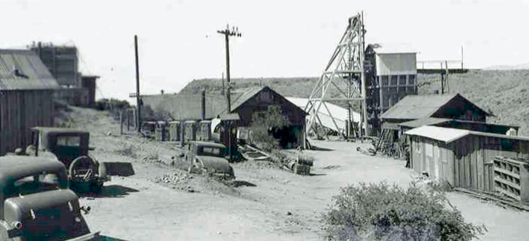
Stanton, Arizona, is not open to the public or tourists. Instead, it is owned, operated, and occupied by the Lost Dutchman's Mining Association (LDMA) and its members. However, in driving his friend Parker Anderson to the town for a book signing, this author had the opportunity to capture some photos of the historic town as it exists presently.

February 7, 2021

Dudley House: First Real Hotel in Prescott

It is the Juniper House that is rightly designated as Prescott's first hotel. However, the Dudley House was the first hotel to offer something more substantial than a canvas roof!

January 24, 2021

Undercover Detective or Stagecoach Robber?


On May 12, 1877, the California-Arizona Stage left Prescott, ultimately headed to San Bernardino. Stage robberies were far too prevalent in the mid-1870s, and the party was relieved to arrive at Wickenburg unmolested. 

As the driver, Jesus Lujan, pulled out of the station, he couldn’t know that just a few miles down the road his stage would fall victim to a carefully crafted ambush. 

December 13, 2020

The Senator Highway

There was a time when Senator Highway was being considered as a part of the north-south territorial highway, connecting Prescott to Phoenix, but it would never make it.

October 25, 2020

1866: Indians Scare Off Pioneer Merchant

William Harrison Hardy had a good gig going. He owned businesses in a town named for him: Hardyville (present-day Bullhead City). He also owned an important and well-used ferry service at that point and a toll road that led to Prescott. Soon, he started opening businesses there that were successful, but in late 1866, he abruptly started to sell off all his interests in the Mile High City.


In 1901, at age 77, he revealed why to the Journal-Miner newspaper.

March 8, 2020

The Indian Uprising of 1872

The ruins of Camp Date Creek
From February through June 1872, Native Americans launched raiding attacks around and surprisingly close to Prescott. The newspapers were filled with accounts of Indian depredations during this time, and the citizenry was both frightened and filled with consternation.

Orders came from Washington to change the practice of largely shooting Indians on sight to one of feeding and educating them instead. Initially, however,  the Indians, many of whom were starving, became emboldened and started to attack.

January 19, 2020

The Forgotten Mother-Load at Richenbar, AZ

Many are familiar with the mining riches that came out of Tip Top and Crown King, but there was another mother-load of gold in that area known as Richenbar.

It was 1867 when three miners decided to explore what appeared to be an ancient, worked-out mine. They descended a 45-degree angled shaft into what appeared to be a cave. There were no timber reinforcements to be seen, and the only thing connecting the ceiling to the floor was a single 4-foot pillar in the middle of the expanse. Upon closer inspection, they noticed a pure vein of gold within the pillar measuring 2 inches thick. Two of the miners wanted to extract it, while the third thought it was too dangerous. The two carefully worked the pillar and were successful in extracting a “coffee sack” full of ore, which eventually was found to contain a whopping 937 ounces of gold.

This mine would come to be known as the Aztec Mine when ancient Native American tools were discovered inside. Eventually, the entire surrounding area would have claims, and the town of Richenbar was born. Soon, the gold deposit there became famous, and the famous would invest in an area so rich that one miner thought it would bring "death to gold."

August 4, 2019

Gillette, AZ: Boom To Bust in 35 Years

Daniel B Gillette needed a mill for his Tip-Top mines, and the mill needed water. He found a spot 6 miles away on the Aqua Fria River. In a matter of months, not only was the mill in full operation, but a whole town, complete with stores, saloons, and hotels, had sprung up out of the wilderness. 

Just nine years later, the town, which some thought would rival Prescott, would be dealt a mortal wound.

December 30, 2018

Wild Wagoner AZ: Founded 1864


Wagoner, Arizona, was the kind of town that Hollywood loves portraying. There were outlaws, gold, guns, fights , and killings.  Like desert grass, Wagoner bloomed in the monsoon of its gold rush and quickly perished soon after.

November 4, 2018

The History of Palace Station


Palace Station, located 17 miles south of Prescott, is one of the most famous stage stops in Yavapai County. Having been built in 1875, its history is long, and its future is bright. 

“Palace Station is one of the few remaining stagecoach stations dating from the settlement of the Arizona Territory. The station played an important role in the social and economic development of the new territory and is now…on the National Register of Historic Places.”

September 23, 2018

Kirkland's Early History

William H Kirkland
Bill Kirkland had a restless spirit, never wanting to stay too long in one place. At the age of 18 he left Missouri to make the long trek to California in 1850. He stayed there only five years before he relocated again, this time to Arizona.

There, the pioneer would be credited with many firsts. However, he is best known for a valley, creek, and town in central Arizona that would end up bearing his name.

June 24, 2018

The Invasion of the Horseless Carriage!

It was 1903 when the first automobile drove into Prescott, and before the year was over, the city fell in love with the new contraption!

Well, mostly...

Still, these "machines," as they were often called, would begin to infiltrate every aspect of life in Prescott.

March 18, 2018

1871: CB Genung Builds the Old Yarnell Road

Come 1871, the farmers and ranchers of Kirkland and Peeples Valley had a logistics problem. They wanted access to the Wickenburg and Phoenix markets for their products, but no wagon road down the rim was suitable for heavy loads.

"There was a road that could be traveled by light rigs and empty teams, but no (loaded wagon) could be handled over it." Additionally, the old trail was an excessive 60 miles long.

A new, better route was desperately needed, and Charles Baldwin Genung proposed a road that would cut off a whopping 33 miles from the journey.

January 21, 2018

The Indian Raid That Gave Fort Rock Its Name

Fort Rock stage stop.
It was Saturday, November 19, 1866 when a force of 50-100 brave Hualapai warriors descended upon a stage stop near Mt. Hope on the road between Prescott and Hardyville (now Bullhead City). The epic battle would be remembered for generations and the name of the locale would change forever.

October 1, 2017

Story Behind the Names: Dewey-Humboldt

It was December 20th, 2004, when Dewey and Humboldt were wedded through incorporation. Although the two experienced vastly different upbringings, they had always had a symbiotic relationship.

With these two stories lies the account of the two major industries in early Anglo Yavapai County history. Dewey was a ranching town providing the food, while her future husband, Humboldt, was a mining town earning the cold, hard cash.

July 23, 2017

The American Ranch: The Ritz of Stage Stops


It was in 1876 when Jefferson Harrison Lee built the large two-story hotel and stage stop. It was located at a prime intersection on the Prescott to Hardyville toll road. Named the American Ranch, it was the most elaborate stage stop on the entire 150-mile road. (*1)

July 2, 2017

Cleator: The Ghost Town That Was Sold Twice


The area in which Cleator, Arizona, stands today was the scene of one of the earliest settlements of Anglos in Yavapai County. At first, the area was known as "Turkey" with nearby "Turkey Creek." (*1)

The selection of this name was obvious enough. Even to this day, one can happen upon wild turkeys in this area of the Prescott National Forest.

January 15, 2017

1875-86: The Murderous Stanton Syndicate


Charles P Stanton in front of his hotel.
NOTICE:
This article is effectively retired. 
Four years after this article was published, historian Parker Anderson researched the subject for his book "Arizona Gold Gangster Charles P Stanton." Nearly all of the folklore was proven to be untrue or highly unlikely...


When Charles P Stanton first set his eyes on the town of Antelope Station, he coveted to make it his own personal empire. Eventually, he would name the town in honor of himself and rule it with a murderous tyranny that would even make Al Capone blush.

"While Stanton, Arizona, never had the glamor of Tombstone, in the days of Charles Stanton, no town in the West could equal the murderous, evil environment predominating life in this (otherwise) thriving gold-mining community." (*1)

In fact, Stanton gained such a heinous reputation that travelers in the area steered clear of the town. (*1)